
Moving day can feel chaotic fast. One of the easiest ways to avoid stress after the move is to label your boxes properly before they leave your old home. Clear labels help movers place boxes in the right rooms, protect fragile items, and make unpacking quicker once you settle in.
Whether you are moving across town or planning a larger relocation, good labeling saves time, prevents confusion, and keeps important belongings easy to find. Many people spend hours searching through random boxes simply because they used vague labels like “miscellaneous” or “kitchen stuff.” A simple system can make a huge difference.
Professional residential movers often say that organized boxes lead to smoother moving days and fewer unpacking problems later. If you want your move to feel more manageable, this guide will walk you through practical box-labeling tips that actually work.
Why Box Labeling Matters More Than People Think
Most people focus on packing supplies, truck rentals, or furniture wrapping. Labeling usually becomes an afterthought. That creates problems the moment boxes arrive at the new home.
Clear labels help with:
- Faster unloading
- Easier room placement
- Less risk of broken items
- Quicker unpacking
- Better organization during the first week
A properly labeled box tells everyone exactly where it belongs and how carefully it should be handled.
Experienced residential movers know that a well-organized move often starts with simple labeling habits.
Start With the Room Name First
The most important part of any moving label is the room destination. Every box should immediately show where it belongs.
Examples include:
- Kitchen
- Master Bedroom
- Kids Room
- Bathroom
- Office
- Laundry Room
Write the room name in large letters on at least two sides of the box and the top. This allows movers to identify the correct room quickly without rotating every box around.
If multiple bedrooms exist, be specific. Instead of writing “Bedroom,” use labels like:
- Guest Bedroom
- Emma’s Bedroom
- Upstairs Bedroom
This small detail prevents confusion during unloading.
Add a Short Description of the Contents
After the room label, include a quick description of what is inside the box.
For example:
- Kitchen – Pots and Pans
- Bathroom – Towels and Toiletries
- Office – Printer Supplies
- Living Room – Cables and Remotes
Avoid writing long inventory lists directly on the box. Keep descriptions short and readable.
This helps during unpacking because you can locate important items without opening every single box.
Use colour coding for faster sorting.
Color coding works especially well for larger homes or family moves.
Assign one colour to each room:
| Room | Color |
|---|---|
| Kitchen | Red |
| Bathroom | Blue |
| Bedroom | Green |
| Office | Yellow |
| Living Room | Orange |
You can use:
- Colored tape
- Stickers
- Markers
- Printable labels
When movers unload the truck, they can identify rooms quickly by color alone.
Many families working with a Montreal Moving Company use color systems because apartment buildings and multi-floor homes can slow down unloading if boxes are not organized.
Label Fragile Items Clearly
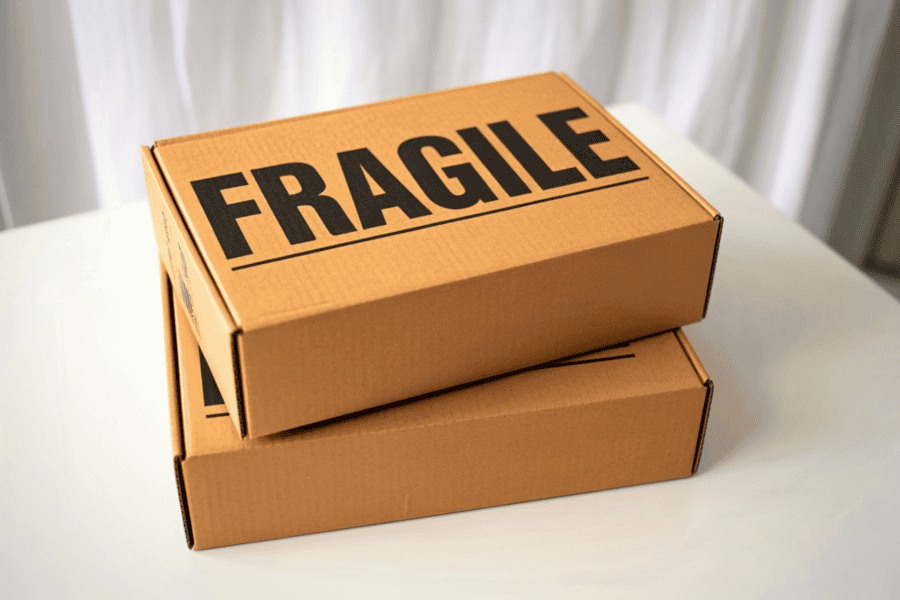
Fragile boxes need extra attention. Simply writing “Fragile” in tiny letters is not enough.
Instead:
- Use large bold lettering
- Mark multiple sides
- Add arrows showing upright position
- Mention the item type when possible
Examples:
- Fragile – Glassware
- Fragile – TV Equipment
- Fragile – Plates Inside
This gives movers a better understanding of how carefully the box should be handled. Even with careful packing and labeling, it helps to understand how moving insurance works for residential moves before moving day arrives.
Number Your Boxes for better tracking.
If you want more control during the move, create a numbering system.
Example:
- Kitchen Box #1
- Kitchen Box #2
- Bedroom Box #5
You can keep a matching checklist on your phone or notebook.
This helps you:
- Track missing boxes
- Prioritize unpacking
- Organize large moves
- Locate essentials faster
Professional residential movers often recommend numbering for long-distance or multi-room relocations.
Pack an “Open First” Box
One of the smartest moving tips is creating an essentials box for the first night.
Label it clearly as:
OPEN FIRST
Include items like:
- Chargers
- Toiletries
- Paper towels
- Snacks
- Basic cookware
- Medications
- Important documents
- Extra clothes
Keep this box separate from the rest of the shipment if possible.
After a long moving day, the last thing anyone wants is digging through twenty boxes looking for toothpaste or phone chargers.
Avoid Overloading the Boxes
A perfect label will not help much if the box is too heavy to carry safely.
Keep these packing rules in mind:
- Heavy items go in small boxes
- Light items go in larger boxes
- Distribute weight evenly
- Reinforce bottoms with strong tape
Boxes that are too heavy may break, especially during stair carries or rainy weather conditions.
A reliable Montreal moving company will usually advise clients to avoid oversized heavy boxes because they slow down the move and increase damage risks.
Books are one of the easiest items to overpack during a move. Read our guide on how to pack books without making boxes too heavy to avoid broken boxes and lifting injuries.
Write Labels Before Stacking Boxes
Many people pack and tape boxes first, then stack them in corners before labeling later. That often leads to missed labels or unreadable writing.
Instead:
- Pack the box
- Seal the box
- Label immediately
- Then stack it
This habit keeps everything organized from the beginning.
Use Waterproof Markers
Labels should stay readable during the entire move.
Use thick permanent markers instead of pens or thin pencils. Waterproof markers work best in case boxes get wet during loading or unloading.
Dark colors like black or blue are easiest to read from a distance.
Don’t Use Vague Labels
Labels like:
- Stuff
- Misc
- Random Items
- Storage
create confusion later.
Instead, use clear wording that tells you exactly what is inside.
Specific labels reduce unpacking stress and help movers place boxes correctly the first time.
Keep Important Documents Separate
Passports, leases, moving contracts, IDs, and financial papers should never disappear inside random boxes.
Use a separate folder or carry-on bag for:
- Personal documents
- Jewelry
- Medications
- Electronics
- Keys
Even the best labeling system cannot replace keeping valuables close to you.
Label Multiple Sides of the Box
A common mistake is labeling only the top of the box.
Once boxes are stacked in a truck or storage area, top labels may not be visible.
Always label:
- Top
- One side
- Opposite side
This speeds up unloading and reduces misplaced boxes.
Create a Simple Priority System
Not every box needs to be unpacked immediately.
You can create categories like:
High Priority
Daily-use items needed within 24 hours.
Medium Priority
Items needed within the first week.
Low Priority
Seasonal décor, books, or storage items.
You can mark these with stars, stickers, or simple letters like:
- H
- M
- L
This helps you unpack in a more organized way instead of opening boxes randomly.
Use Printed Labels for Large Moves
Handwritten labels work well for smaller homes, but printed labels can help for larger family relocations.
Printed labels look cleaner and reduce handwriting confusion.
Some people even include QR codes or digital inventory systems, though simple labels are usually enough for most households.
The key is consistency.
Should You Label Boxes by Owner?
For family moves, labeling by person can help a lot.
Examples:
- Sarah – Bedroom
- Kids – Toys
- Dad – Office
This allows everyone to unpack their own items faster without mixing belongings together.
What Movers Need to See Most
Professional movers mainly look for three things:
- Destination room
- Fragile warnings
- Weight concerns
If those details are easy to spot, the moving process becomes smoother for everyone involved.
Experienced residential movers can work much faster when boxes are organized clearly and consistently.
Working with organized movers can make unpacking much easier. Use this checklist for hiring reliable residential movers near you before booking your move.
Common Labeling Mistakes to Avoid
Here are mistakes that often create unpacking headaches later:
- Using tiny handwriting
- Forgetting fragile warnings
- Mixing rooms in one box
- Leaving boxes unlabeled
- Using weak tape
- Overfilling boxes
- Writing unclear descriptions
Fixing these issues before moving day saves time and frustration later. Small packing mistakes can lead to damaged items during transport. Learn how professional movers help prevent common moving damage during residential relocations.
A Simple Labeling System That Actually Works
If you want an easy approach, follow this format:
Room + Contents + Priority
Example:
Kitchen – Plates and Bowls – High Priority
That single line gives movers and homeowners all the information they need.
Simple systems usually work better than overly detailed methods.
Make Unpacking Easier From Day One
Good labeling is not about perfection. It is about making life easier once you arrive at your new home.
A few extra seconds spent labeling each box properly can save hours of confusion later.
Clear organization helps reduce stress, especially during busy family moves, apartment relocations, or long-distance transitions.
Working with experienced movers also helps keep the process organized from start to finish. The team at Anber Movers understands how proper packing and labeling can make moving day far more manageable.
If you are planning a move soon, now is a good time to organize your packing strategy and prepare your boxes before moving day arrives.